
About Svaneti
A thousand stone towers. Glaciers that feed rivers older than Rome. Polyphonic hymns that predate written music. This is the place the Mongols never reached — and time forgot to modernize.
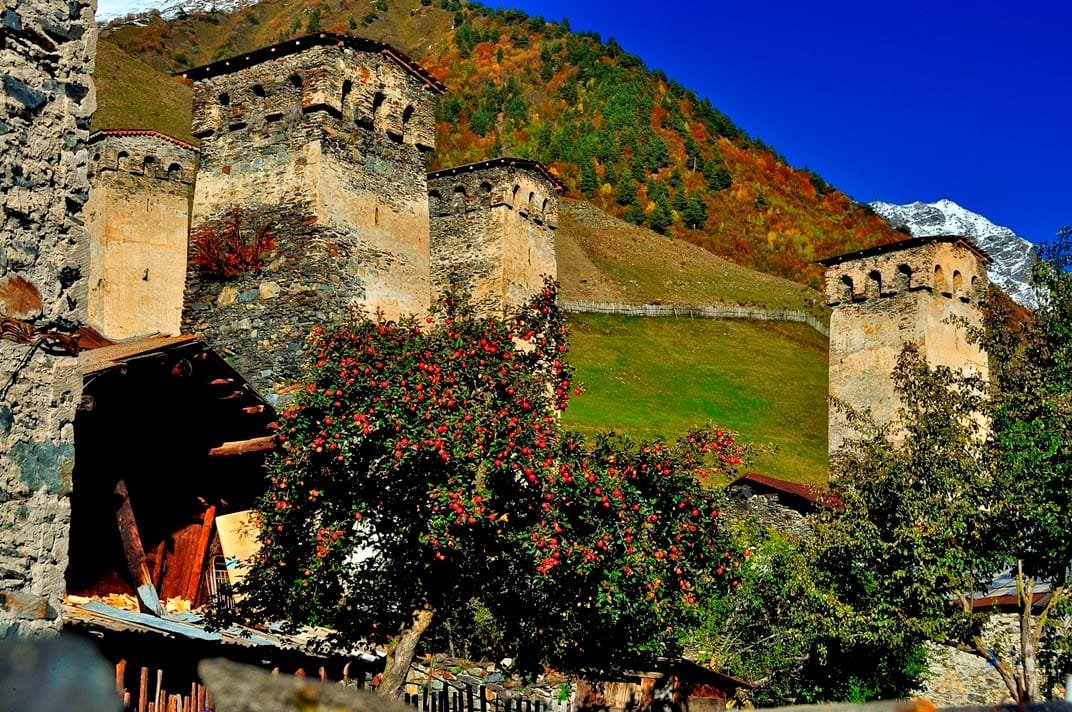
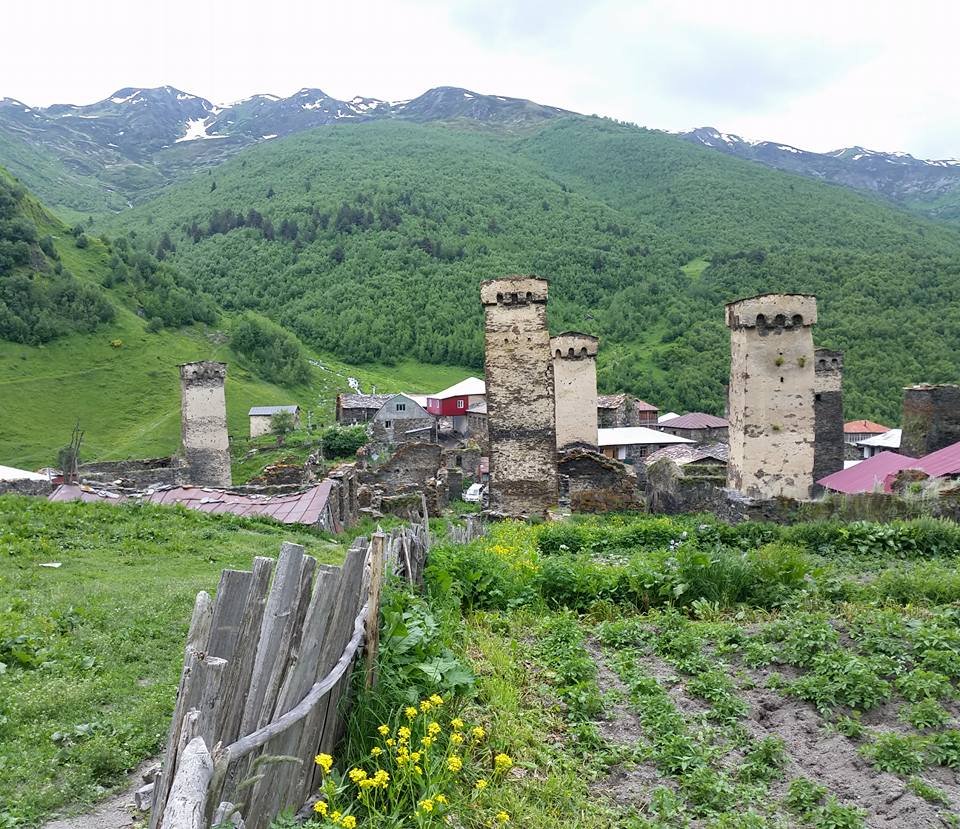
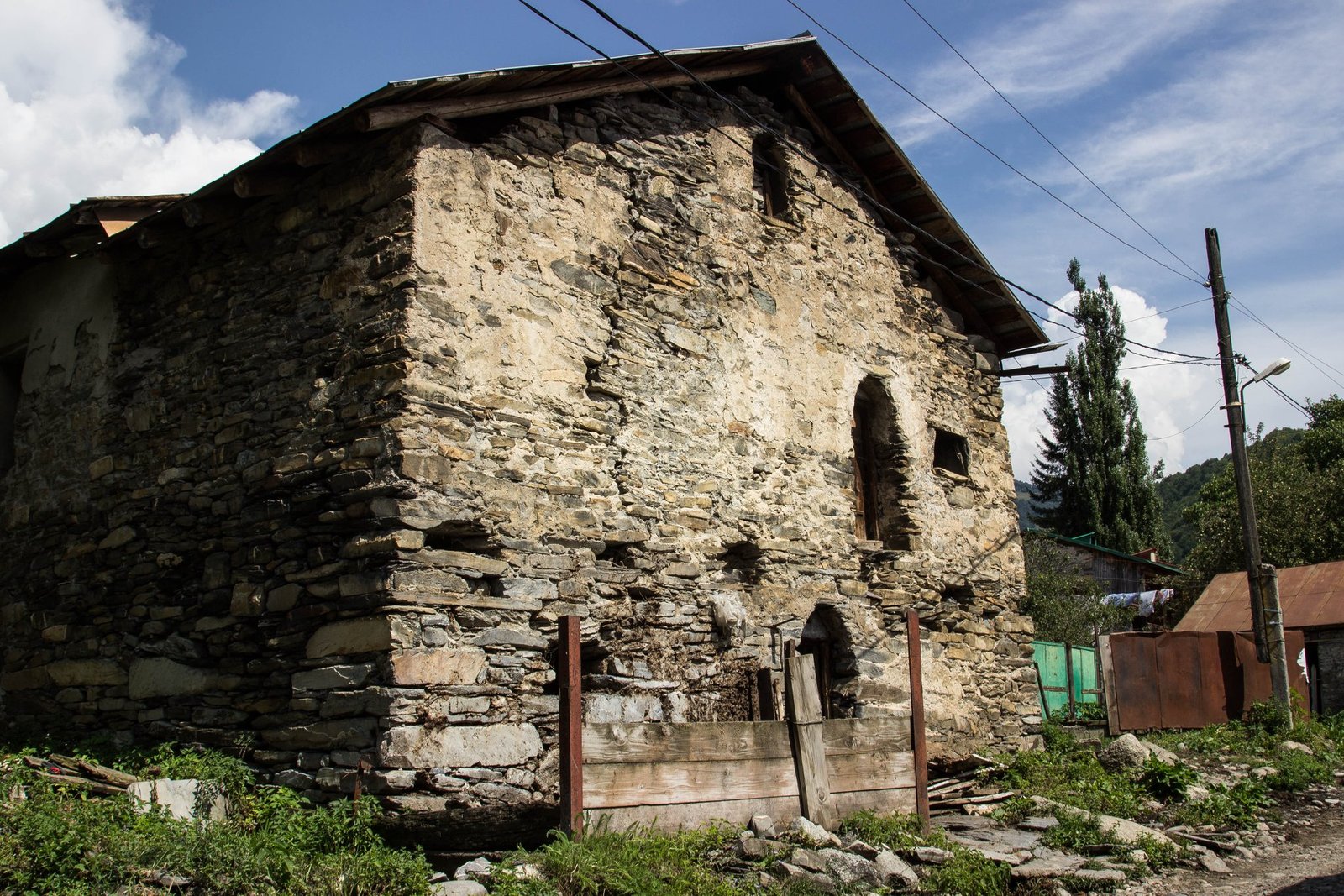
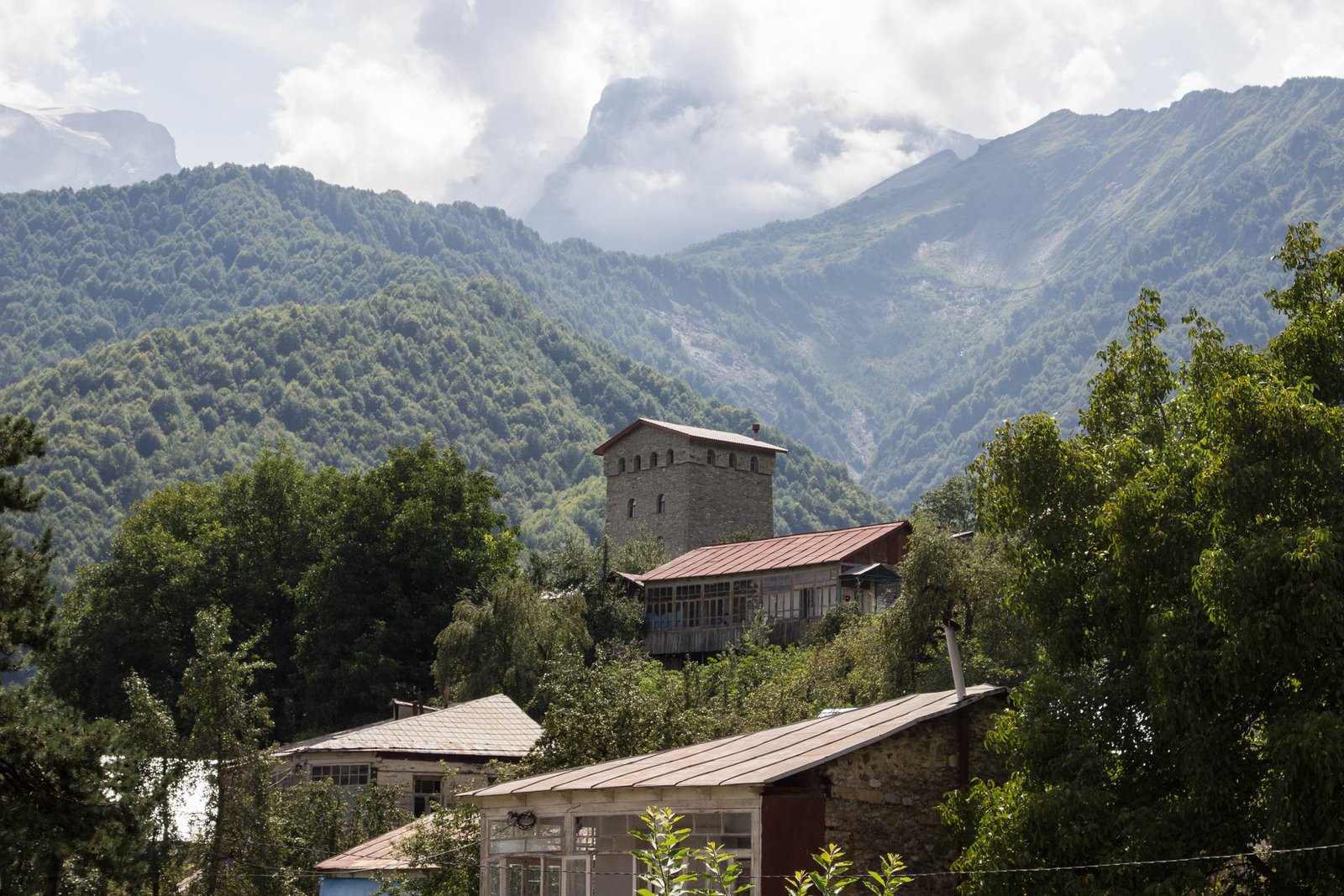
Where the Caucasus Still Feels Untamed
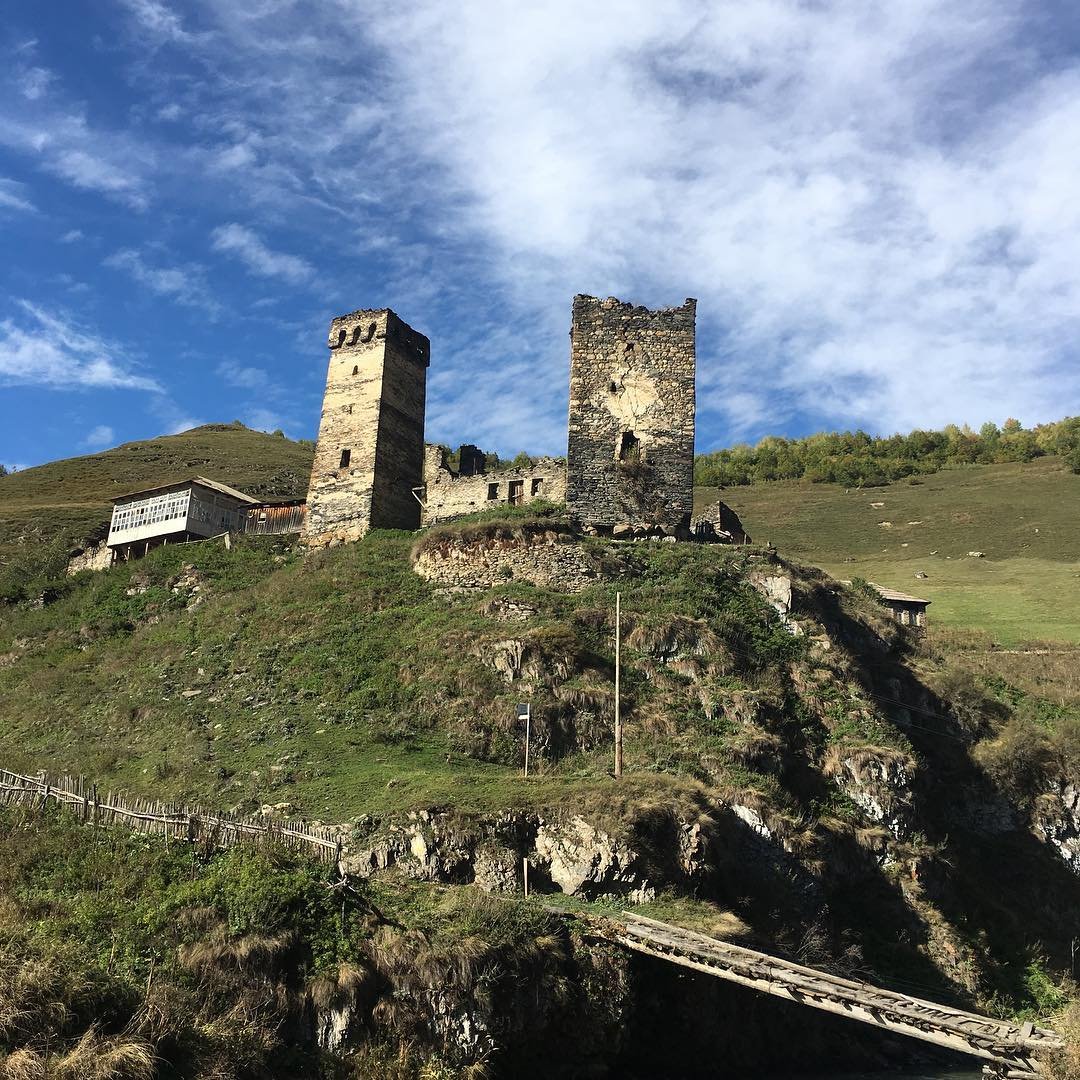
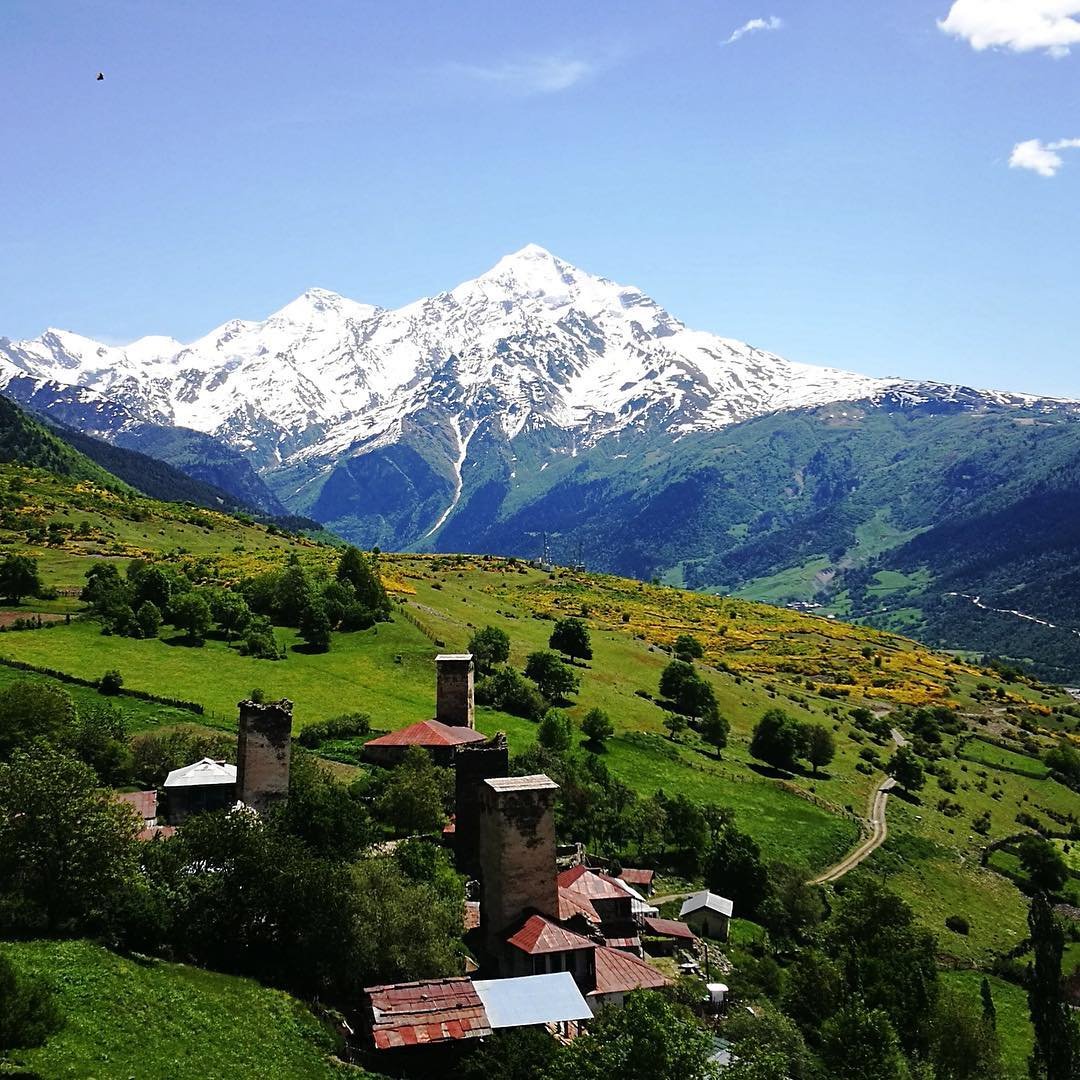
Somewhere in northwest Georgia, the road climbs past the last cell tower and keeps going. The valley narrows. Stone towers begin to appear between birch trees — not ruins, not museum pieces, but lived-in homes with smoke rising from the chimneys. A man leads a horse along a path that has been walked since the Bronze Age. You’ve arrived in Svaneti.
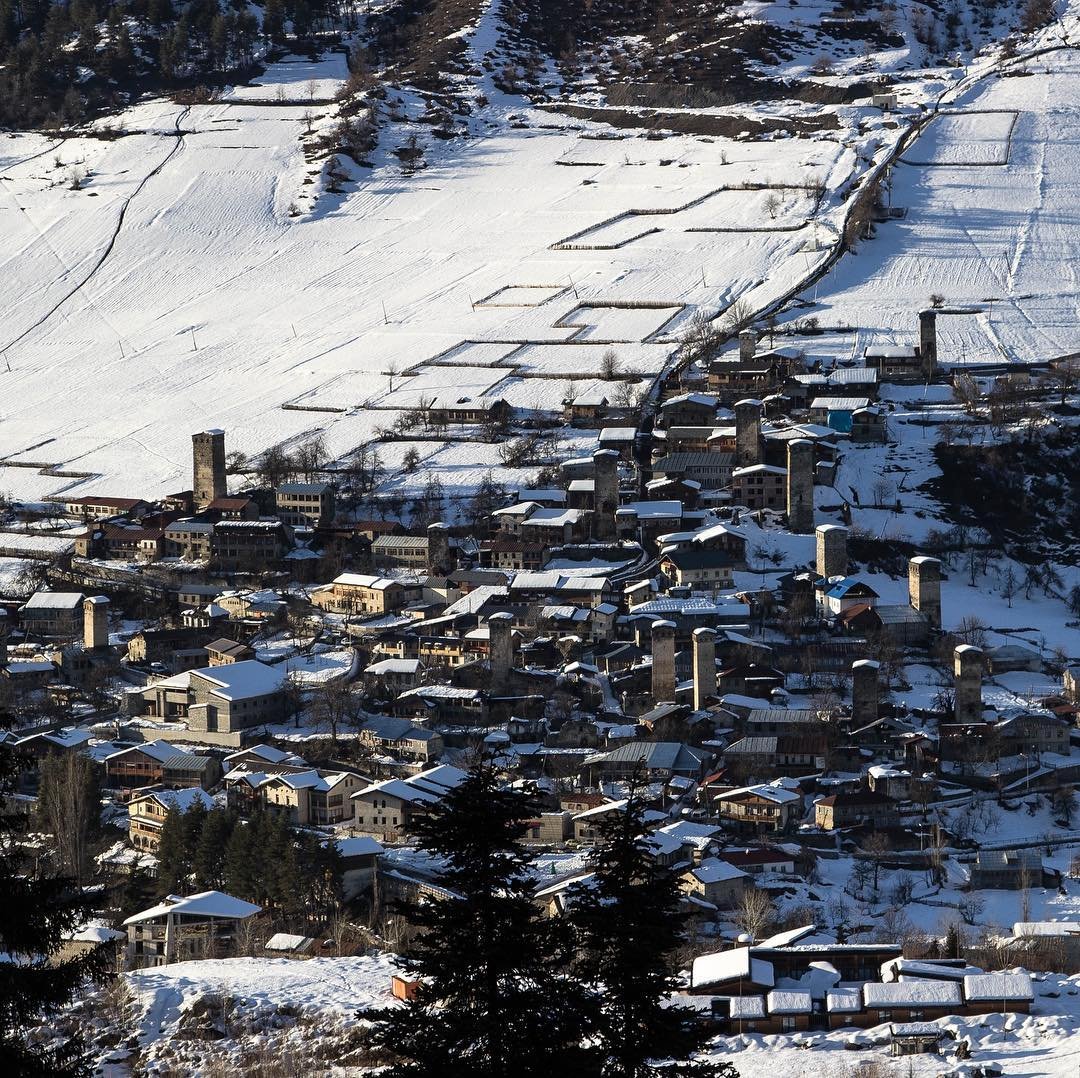
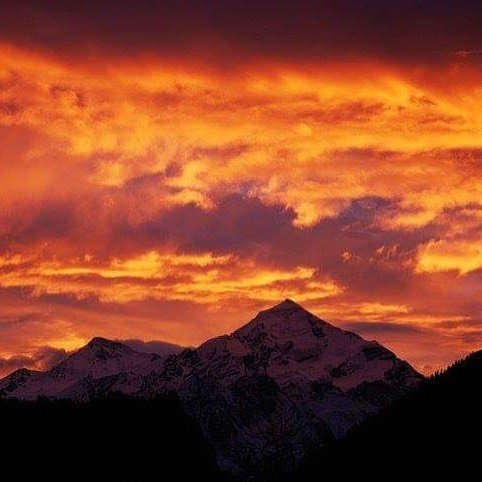
The numbers alone are striking. Four of the ten highest peaks in the Greater Caucasus stand here, including Georgia’s tallest, Mount Shkhara at 5,201 meters. The community of Ushguli, at 2,200 meters elevation, is among the highest continuously inhabited settlements anywhere in Europe. Over 200 medieval tower-houses cluster in the village of Chazhashi alone — enough to earn UNESCO World Heritage status in 1996.
But Svaneti isn’t really about numbers. It’s about what happens when an entire civilization develops in near-total isolation for thousands of years — and then you walk into it. The Svan people speak a Kartvelian language that diverged from Georgian over 2,500 years ago. Their polyphonic singing carries melodies that predate Christianity. Their churches hold icons that lowland Georgians sent up here for safekeeping during Mongol invasions — treasures that never came back, because they were safer in these mountains than anywhere else.
The Greek geographer Strabo described the Svans around the 1st century BC as fierce warriors with a king and council of three hundred, capable of raising an army of 200,000 men. He noted that winter torrents brought down gold, which the locals collected in fleece-lined troughs — the probable origin of the Golden Fleece legend. The fierceness has mellowed into a generous, warm hospitality. The golden fleece, though, is still waiting for you in the rivers.
Why This May Be the Best Trekking in Europe
The Alps are magnificent. They’re also crisscrossed by cable cars, managed to the meter by Swiss precision, and — from June to September — walked by tens of thousands of people a day. The Dolomites, the Pyrenees, Norway’s fjords: all spectacular, all well-trodden, all expensive. Svaneti offers the same caliber of mountain scenery with a fraction of the crowds, at a fraction of the cost, and with something the others can’t match — a living medieval culture that you walk through, not past.
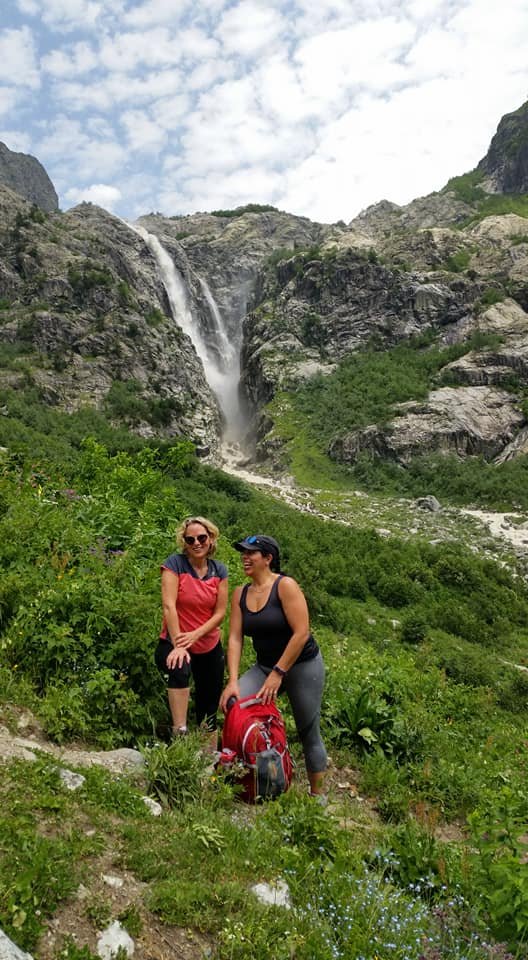
Consider what you get on the classic Mestia to Ushguli trek. Over four days and roughly 58 kilometers, the trail leads through alpine meadows stacked with wildflowers, past hanging glaciers — Chalaadi, Adishi, Shkhara — and through villages where stone towers built in the 9th century are still someone’s home. You sleep in family guesthouses. Your host makes kubdari from scratch and offers chacha whether you ask for it or not. The trail is well-marked but uncrowded. The views would be the headline anywhere in the Alps, but here they come with layers of history that European trails simply don’t have.
That’s the thing about Svaneti. You aren’t just trekking through landscape. You’re trekking through a civilization.
The Classic: Mestia to Ushguli (4 Days)
This is the route that put Svaneti on the trekking map, and for good reason. Roughly 58 kilometers of trail connecting the regional capital to Europe’s highest inhabited settlement, passing through the villages of Zhabeshi, Adishi, and Iprali along the way. You’ll cross the Chkhunderi Pass at 2,655 meters, wade through river crossings (get used to wet boots in early season), and camp or sleep in family-run guesthouses each night. The highlight? Coming over the last ridge to see Ushguli’s tower cluster silhouetted against the massive wall of Mount Shkhara. Moderate difficulty — you don’t need mountaineering experience, but you do need stamina for six to eight hours of walking a day.
The Day Hikes: Koruldi Lakes & Chalaadi Glacier
Not ready for multi-day? Mestia sits at the center of some of the best single-day hikes in the Caucasus. The Koruldi Lakes trail climbs from town to 2,850 meters over about six hours, rewarding you with a panoramic view of the Greater Caucasus range — Mount Ushba’s twin peaks are directly in front of you, close enough to feel personal. The Chalaadi Glacier trail is shorter and easier (four to five hours round trip), following the Mestiachala River through forest to the glacier’s tongue. You’ll hear it cracking before you see it.
The Transcaucasian Trail: Chuberi to Ushguli (8–10 Days)
For experienced trekkers who want the full Svaneti immersion. This 140-kilometer stage of the long-distance Transcaucasian Trail crosses five major mountain passes, descends into forested valleys, and threads through remote villages where guesthouses are sparse and self-sufficiency matters. The trail joins the popular Mestia–Ushguli route at the halfway point, but the first section — Chuberi through the Nenskra Valley — is where you’ll have the mountains largely to yourself. Red-and-white blazes mark most of the route. Giant hogweed, aggressive shepherd dogs, and afternoon lightning storms keep things interesting.
Off the Beaten Track: Latpari Pass & Lower Svaneti
Most trekkers end at Ushguli and catch a marshrutka back to Mestia. The ones who keep going cross the Latpari Pass at 2,830 meters into Lower Svaneti — and that’s where the real emptiness begins. The descent to Chvelpi takes you over the spine of the Svaneti Range itself, with 360-degree views of the Caucasus ridge. Lower Svaneti is quieter, greener, less touristed. The infrastructure is thinner, the reward is solitude, and the views from the ridge are some of the finest in the entire range.
| Route | Duration | Distance | Difficulty | Highlights |
|---|---|---|---|---|
| Mestia – Ushguli | 4 days | 58 km | Moderate | Adishi Glacier, Chkhunderi Pass, Ushguli towers |
| Koruldi Lakes | 1 day | 11 km | Moderate | Panorama of Ushba & Greater Caucasus |
| Chalaadi Glacier | ½ day | 14 km | Easy | Glacier icefall, forest walk |
| Transcaucasian Trail (Svaneti stage) | 8–10 days | 140 km | Hard | 5 passes, Nenskra Valley, wild camping |
| Ushguli – Shkhara Glacier | 1 day | 16 km | Moderate | Springs of the Inguri River, Shkhara wall |
| Latpari Pass & Lower Svaneti | 2 days | ~25 km | Hard | Ridge panorama, mountain lake, total solitude |
| Mazeri – Guli Glacier | 1 day | ~12 km | Hard | Ushba south face approach, remote glacial terrain |
The Towers of Svaneti
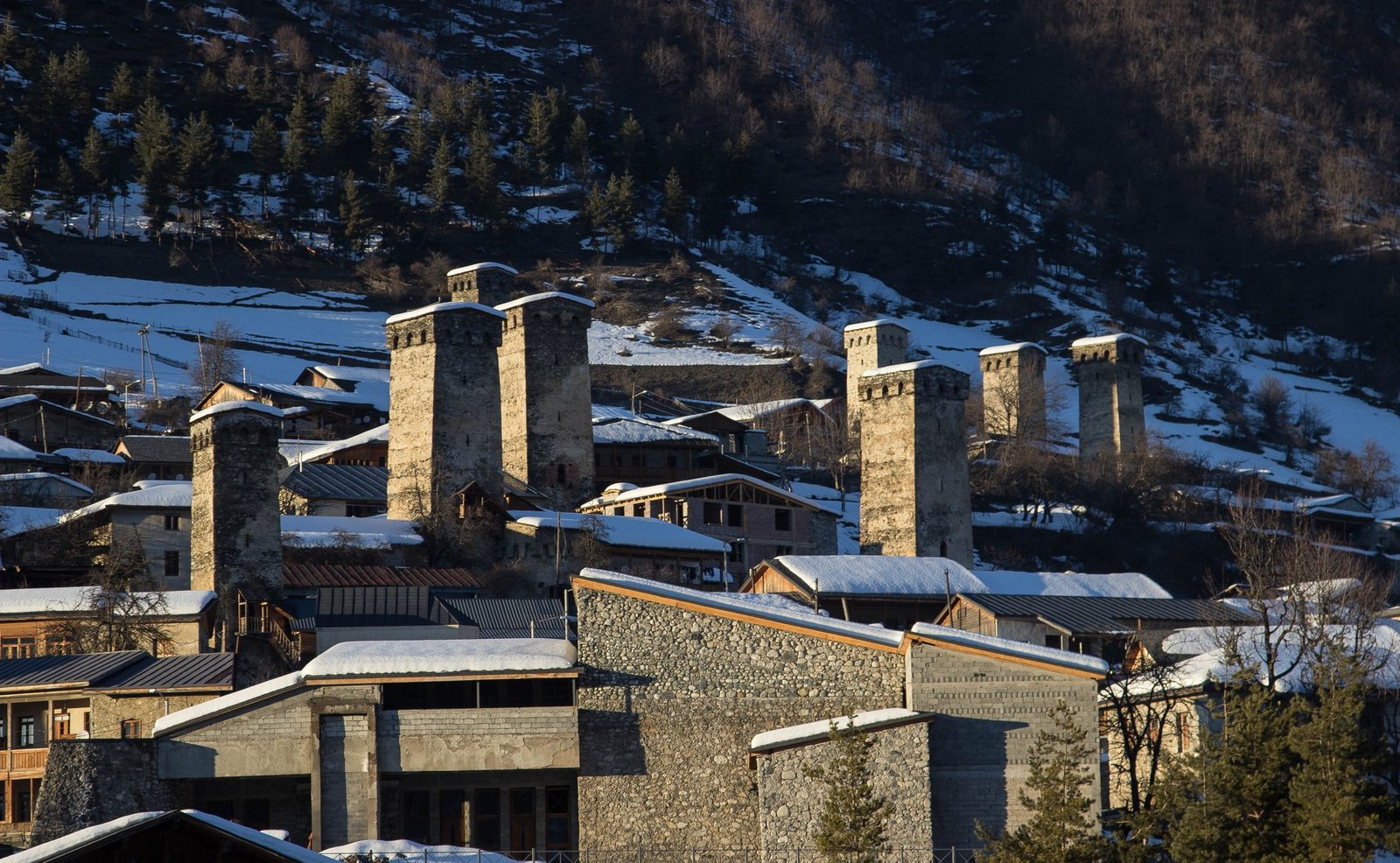
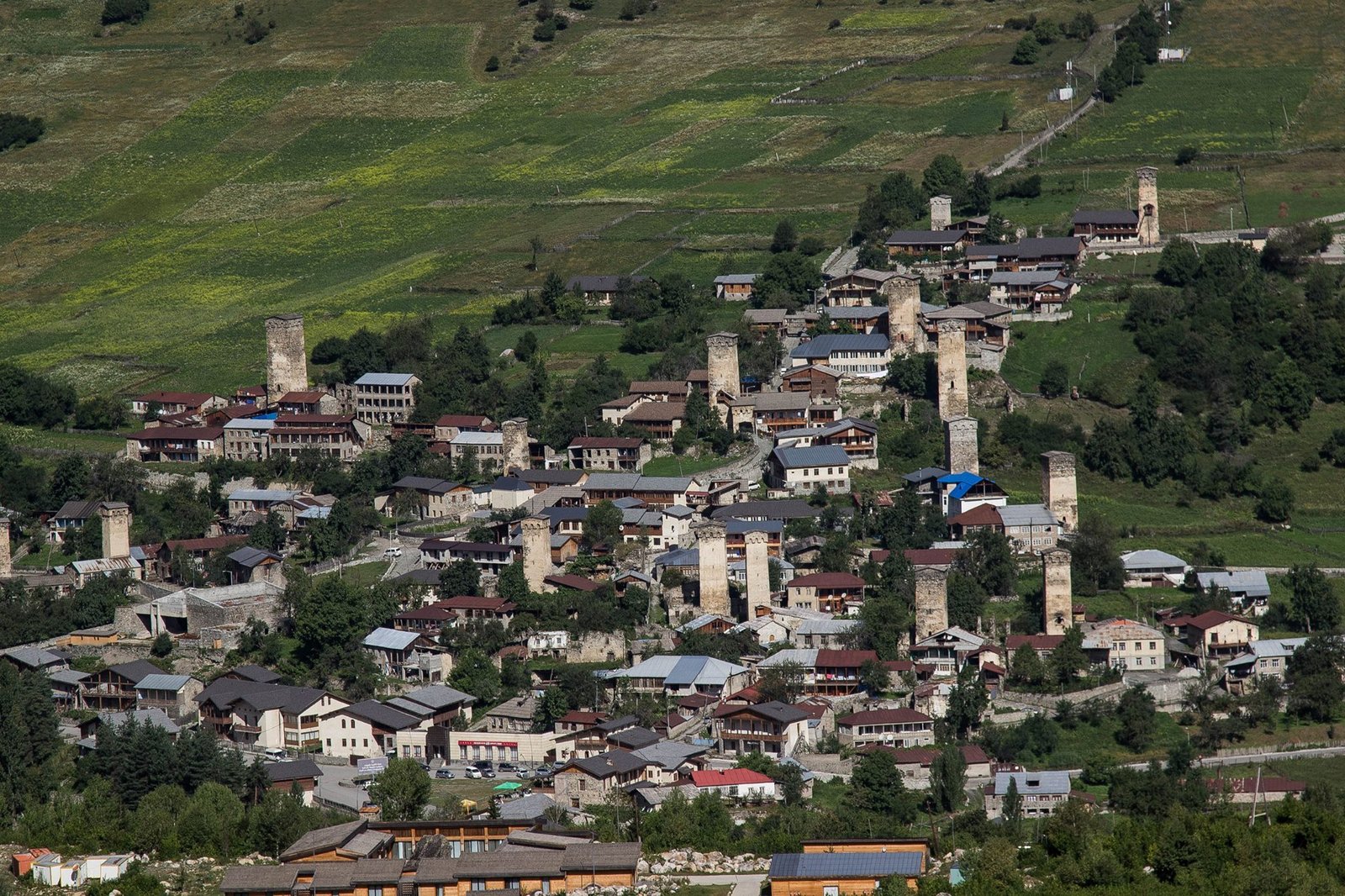
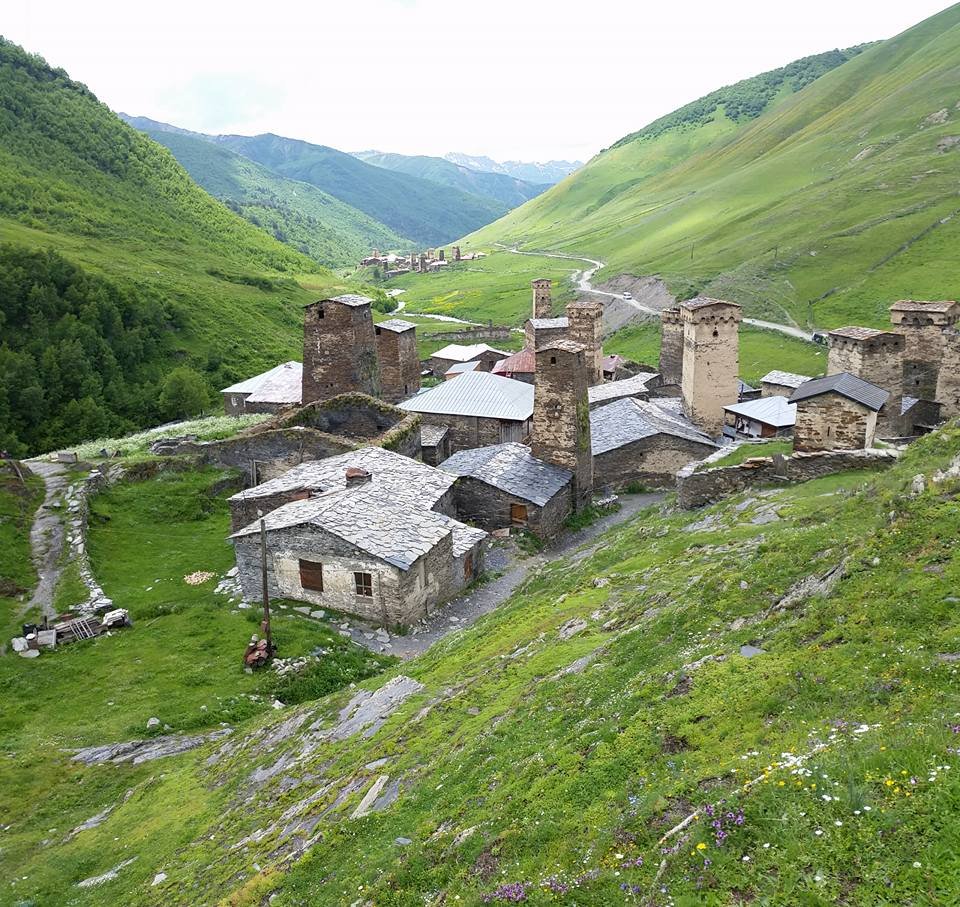
They rise three to five stories above the village rooftops, tapering slightly as they climb, topped with stone parapets built for dropping things on unwelcome visitors. Roughly 3,500 of these defensive tower-houses — koshkebi in Georgian — survive across the region, most built between the 9th and 12th centuries during Georgia’s golden age under Queen Tamar. The tallest reach 25 meters. In Chazhashi village alone, more than 200 medieval structures still stand — towers, churches, fortified dwellings — in a concentration that justified the UNESCO inscription.
What makes them remarkable isn’t just their age or their density. It’s that people still live in them. Unlike European castle ruins roped off behind admission desks, Svaneti’s towers are woven into daily life. The ground floor stores grain. The upper floors are living quarters. The defensive slits that once aimed arrows now frame views of the Caucasus. For visitors from Western Europe, where heritage means cordoned exhibits and audio guides, the casual intimacy of these structures can take some adjustment. You’re standing in someone’s kitchen. The kitchen is a thousand years old.
Historians continue to debate the towers’ primary purpose. The standard explanation — defense against foreign invaders — is complicated by the fact that many were built during a period of peace and prosperity, and the Mongols never reached Svaneti. Local Svans offer a different emphasis: protection during blood feuds between clans, which were governed by a complex moral code that persisted into the 20th century. The truth is probably both, and something more — status, storage, and the simple Svan impulse to build high in a land defined by altitude.
Churches of Svaneti
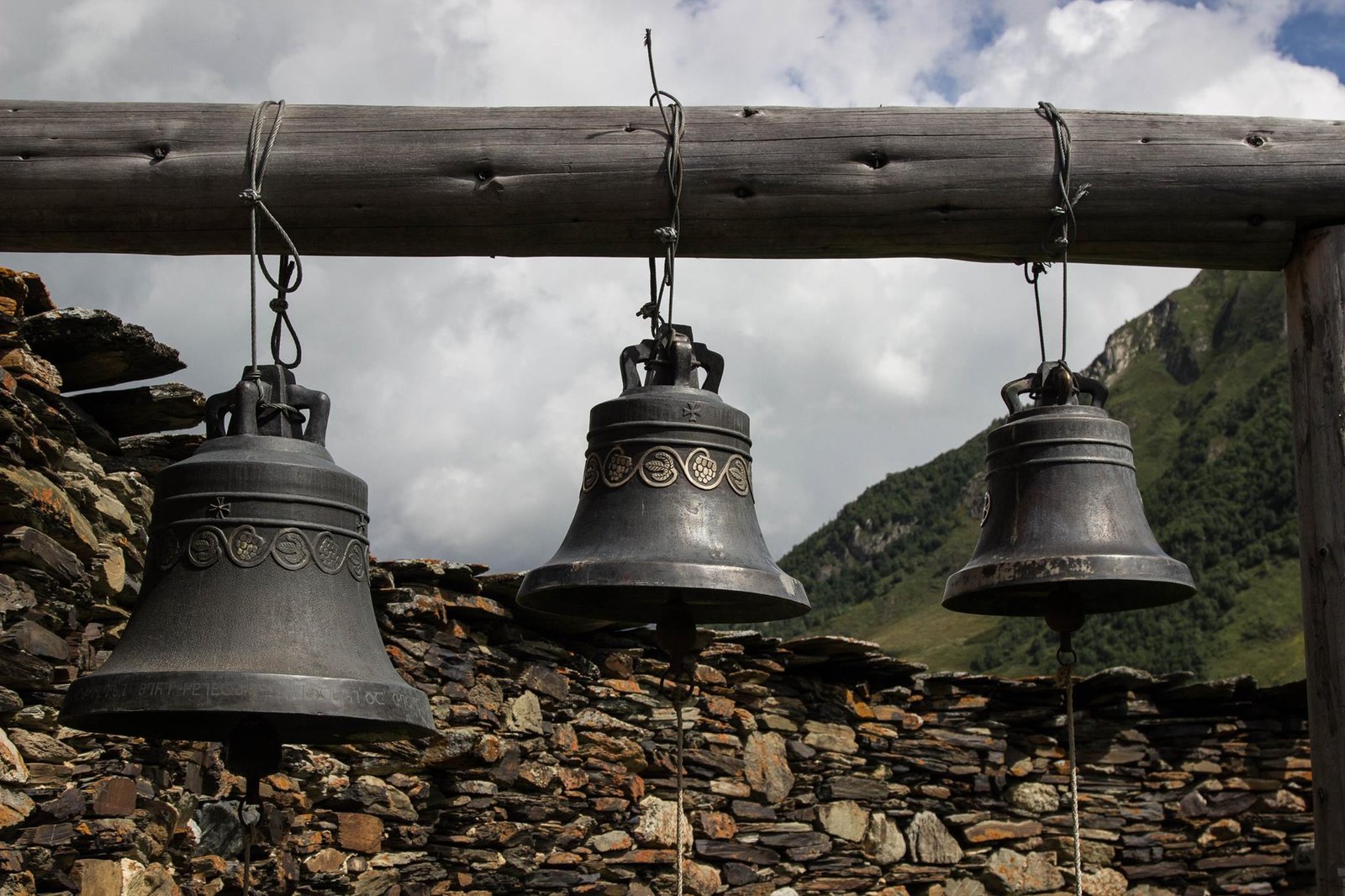
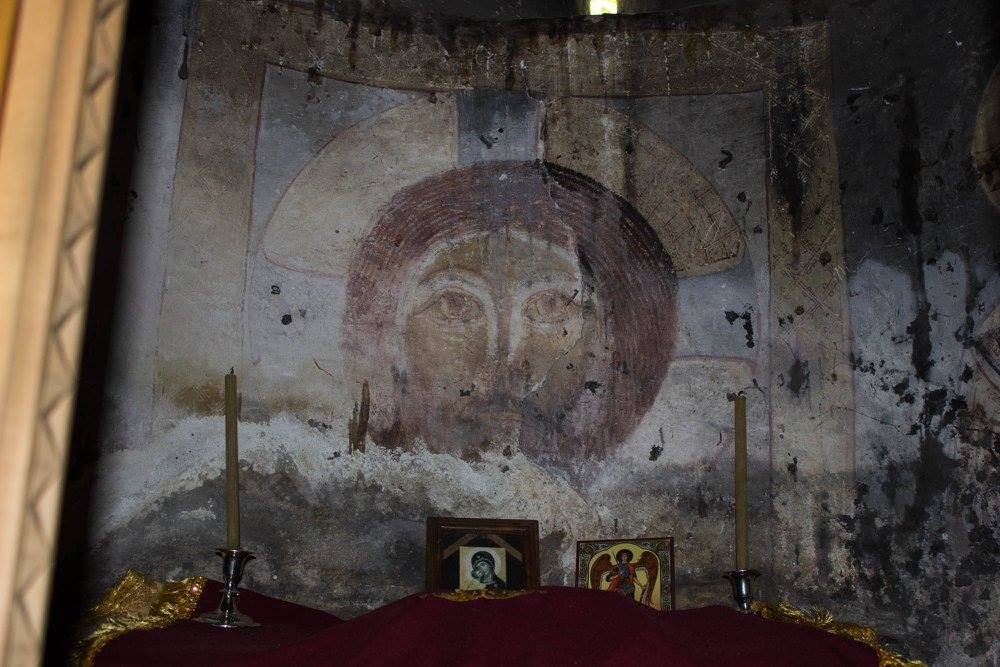
Around 100 medieval churches are scattered across Svaneti’s villages, most dating from the 10th to 15th centuries, with a handful reaching back to the 8th. They’re small — squat stone buildings that look more like farmhouses than cathedrals — and many were built and owned by individual clans, which is why a single village might have eight or ten of them. Step inside one, and you’re standing in near-darkness, squinting at frescoes painted directly onto rough stone walls. Your eyes adjust. Saints materialize. Archangels in faded reds and golds watch you from the apse.
What sets Svaneti’s churches apart is the layering. Some have two or three generations of frescoes painted over each other, each reflecting a different era’s theology and aesthetics. The earliest layers — from the late 10th century, when Svaneti was cut off from mainstream Georgia by Arab conquest — show a striking fusion of Christian imagery with pre-Christian worldview. The Pantocrator enthroned in the apse doubles as an echo of Morige, the pagan supreme deity. Warrior saints function as Christian stand-ins for khati, the protective clan spirits. Two churches even depict scenes from the Amiran-Daredjaniani, a 10th-century secular epic of feuding knights — not exactly standard Orthodox iconography.
The Lamaria church perched above Ushguli is the most photographed: a 10th-century structure framed against Shkhara’s ice wall, named for both the Virgin Mary and an older Svan goddess. Inside, candlelight catches distressed frescoes. Outside, sacrificial bull bones hang from the churchyard trees — a reminder that in Svaneti, Christianity didn’t replace older beliefs so much as absorb them.
During centuries of invasion and unrest, Georgian kings and clergy sent their most precious religious objects to Svaneti for safekeeping — icons, manuscripts, gold and silver liturgical vessels. The mountains were safer than any vault. Many of these treasures remain in the region today, including a remarkable collection displayed at the Svaneti Museum of History and Ethnography in Mestia, where objects from the 9th and 10th centuries sit in cases alongside Bronze Age copper tools.
Svan Culture & Traditions
The Svan People
The Svans are not a separate ethnic group — ask any Svan and they’ll tell you they’re Georgian, full stop. But they are a distinct people within Georgia, with their own language, customs, and a particular way of being in the world that has been shaped by millennia of mountain living. The Svan language (Lushnu nin) branched off from proto-Kartvelian over 2,500 years ago. UNESCO classifies it as “definitely endangered” — children today mostly grow up speaking Georgian — but you’ll still hear it in kitchens, at family gatherings, and especially in song.
And what songs they are. Svan polyphonic singing — three-part harmonies built on parallel motion, close intervals, and a vocal timbre that sounds like the mountains themselves — is among the oldest continuously performed music in Europe. Georgian polyphony as a whole is recognized by UNESCO, but ethnomusicologists consistently point to the Svan tradition as the most archaic layer: solemn, dissonant, heavy with something that predates liturgy. One Georgian scholar described all Svan songs together as “a single enormous hymn to the gods and nature.” Some hymns still carry pre-Christian texts. Others have been given Christian words while keeping melodies that are almost certainly older. A few, like “Dala Kojas Khelghvazhale,” describe a pagan nature goddess giving birth on a mountaintop — not easily reconciled with Orthodox theology, but the Svans sing it anyway.
Festivals & Rituals
The ritual calendar in Svaneti runs on a different clock than the rest of Georgia. Pagan observances, Christian feast days, and agricultural cycles overlap and interweave in ways that make strict categorization impossible — and make visiting during a festival an extraordinary experience.
Lamproba (February) is the most visually dramatic: a fire festival honoring the ancestors and marking the slow return of spring. Families craft torches from birch bark and carry them in procession to the village cemetery, planting them in the snow beside family graves. Songs rise. Bonfires burn against the towers. The origins are pre-Christian — light overcoming darkness, prayers for fertility and harvest — layered with Orthodox symbolism over the centuries. It is not a tourist event. Visitors are welcome, but you are witnessing something that families have done exactly this way for longer than anyone can remember.
Kvirikoba (July) is the region’s largest religious gathering. Hundreds of pilgrims climb to St. Kvirike Church in the village of Kala, where the 1,000-year-old Shaliani icon is brought out from the Mestia museum for the occasion. The name itself carries layers: Kvirike (the Christian martyr) echoes Kviria, the chief deity of the pre-Christian Svan pantheon. Inside the church, an Orthodox liturgy. Outside, a bull sacrifice and communal feast. Young men compete in boulder-throwing. The two ceremonies run simultaneously, and no one seems to find that strange.
Lipanali is the festival of the dead — a solemn observance where families prepare ritual food for departed relatives, visiting ancestral shrines called khati that are used only during this time.
Svan Cuisine
Svan food is mountain food in the purest sense — built from what grows and survives at 2,000 meters, designed to keep you warm and fueled through winters that can bury a village for months. The ingredients are elemental: meat, cheese, potato, corn flour, millet. The genius is in what the Svans do with them.
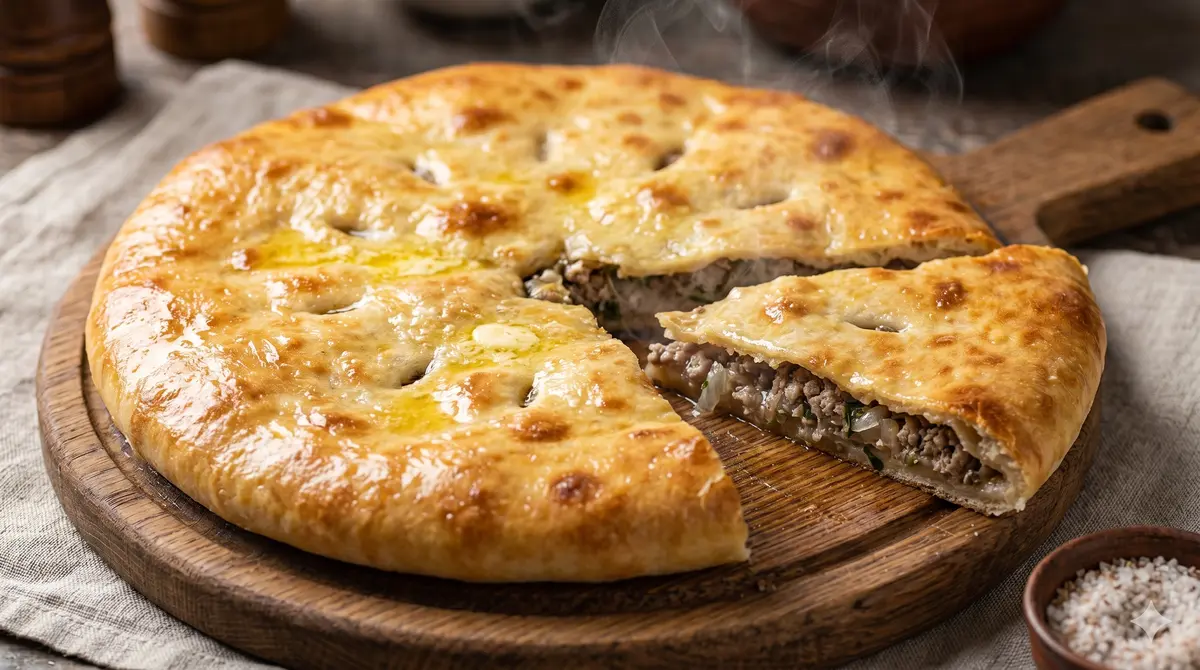
Kubdari is the dish that defines Svaneti. A round bread filled with finely chopped beef (sometimes mixed with pork), seasoned with onion, garlic, wild dill, and — critically — Svan salt. The filling goes in raw, the dough is sealed and baked on high heat until the crust turns crisp and spotted. You cut it open and the steam carries that distinctive Svan spice aroma. Every family makes it slightly differently. Every family insists theirs is the correct version. Kubdari earned Intangible Cultural Heritage status in Georgia in 2015, which locals accepted with approximately zero change in how they make it.
Tashmijabi is what happens when you mash boiled potatoes, throw in an unreasonable amount of fresh Svan cheese, and keep stirring over heat until the cheese melts into a stretchy, gooey, almost fondue-like mass. It’s comfort food of the highest order — the kind of dish you eat after eight hours of hiking through rain and immediately decide the day was worth it. The cheese used in the authentic version is specific to the region: similar to sulguni but with a stronger, slightly sour bite. Substitutes exist. The Svans don’t approve of them.
Chvishtari rounds out the essential trio. Corn flour mixed with aged cheese, kneaded into balls, and fried or baked. The Svaneti version adds millet flour, which makes the result lighter and slightly sweeter than the Megrelian version you’ll find in the lowlands. Traditionally baked on walnut leaves, which is considered a delicacy.
Svan Salt — The Spice Blend That Changed Georgian Cooking
Svanuri marili sits on every Svan table the way salt and pepper sit on Western ones — except it is both at once, and more. The base is salt ground together with blue fenugreek, dried marigold petals, wild caraway, coriander, dill, and garlic. Every household has its own proportions. The result is a warm, aromatic seasoning that works on essentially everything: meat, cheese, vegetables, eggs. It’s the most popular souvenir from Svaneti, and for good reason — it instantly elevates any dish with a flavor that’s impossible to replicate without the specific wild herbs that grow in these mountains.
| Dish | What It Is | When to Eat It |
|---|---|---|
| Kubdari | Meat pie with Svan spices | Any meal — the essential Svan dish |
| Tashmijabi | Stretchy potato-cheese mash | After a cold day on the trail |
| Chvishtari | Corn & cheese bread (with millet) | Breakfast or trail snack |
| Lukne | Svan-style khachapuri with local cheese | Lunch or dinner |
| Petvraal | Millet & cheese pastry | Traditional home cooking |
| Kharshil | Barley and nettle soup | Winter staple, warming and hearty |
| Svan Honey | Wildflower honey from local hives | With bread at breakfast, or as a gift |
Nature in Svaneti
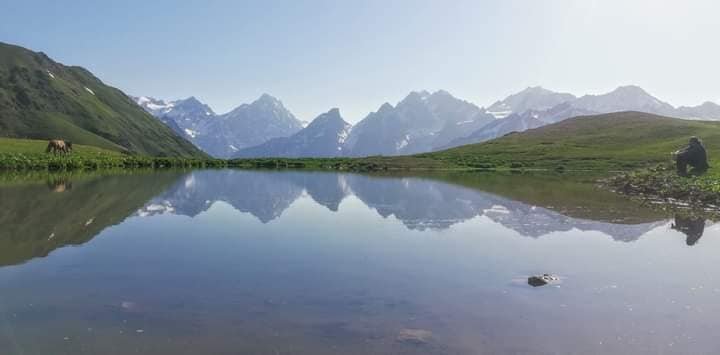
The Caucasus is older than the Alps. The peaks are higher, the valleys deeper, the ecology more diverse — and in Svaneti, most of it has never been managed, manicured, or turned into a national park brochure. What you see is what has always been here.
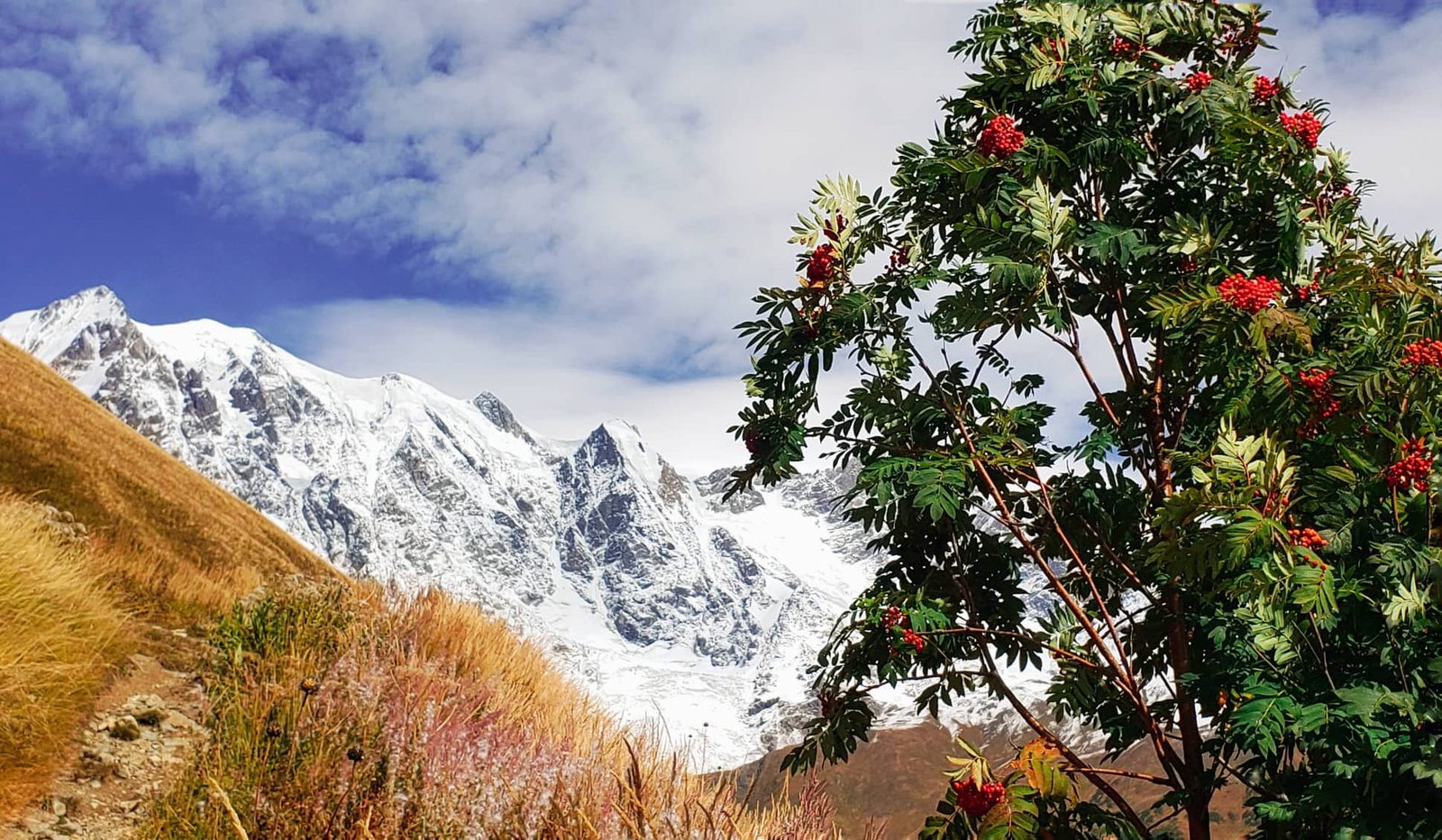
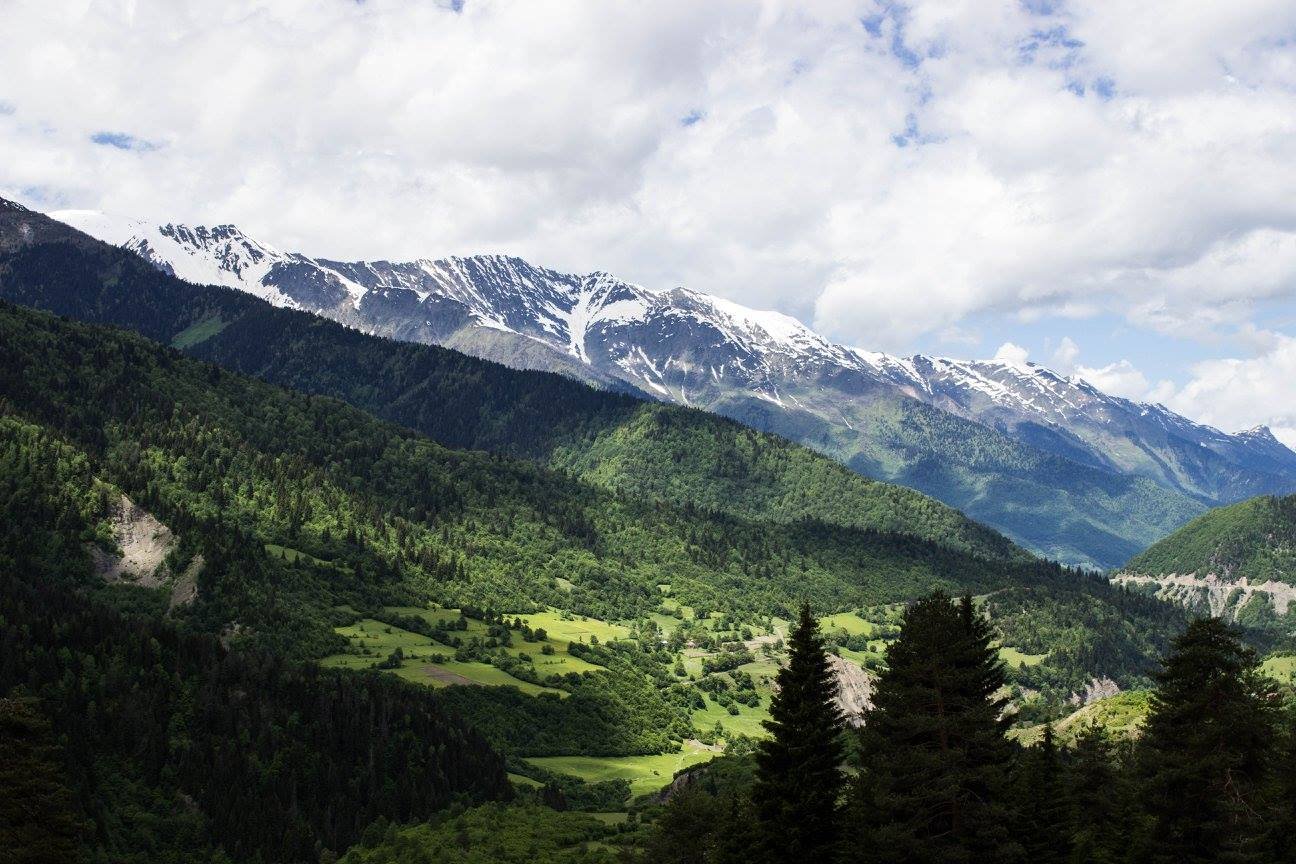
The altitude range alone creates an astonishing variety of environments within a short distance. Below 1,200 meters, beech and oak forests fill the valleys. Between 1,200 and 1,800 meters, spruce and fir take over — dense, dark, atmospheric forests where trails disappear into green tunnels. Above the treeline, alpine meadows explode with wildflowers from June through August: gentians, primulas, rhododendrons in dense carpets that stop you mid-trail. And then the glaciers begin.
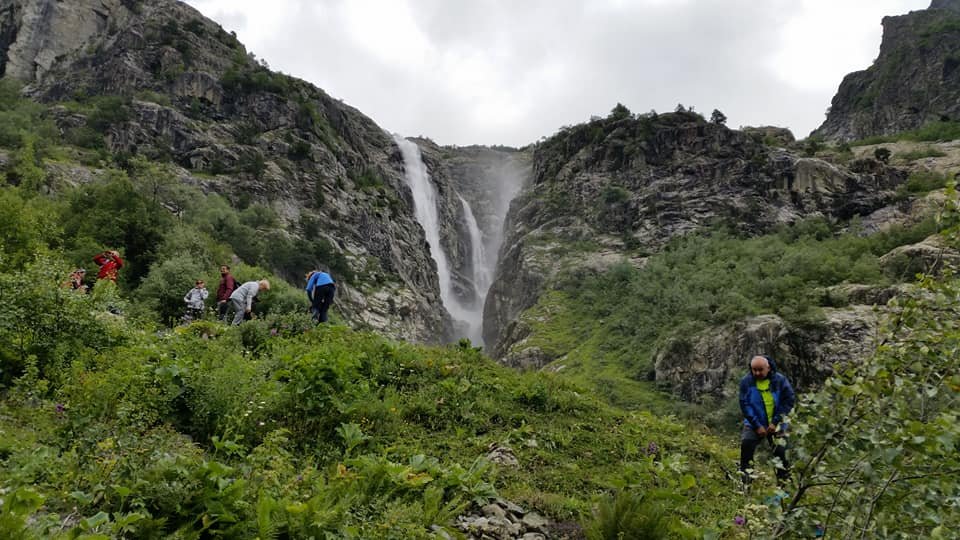
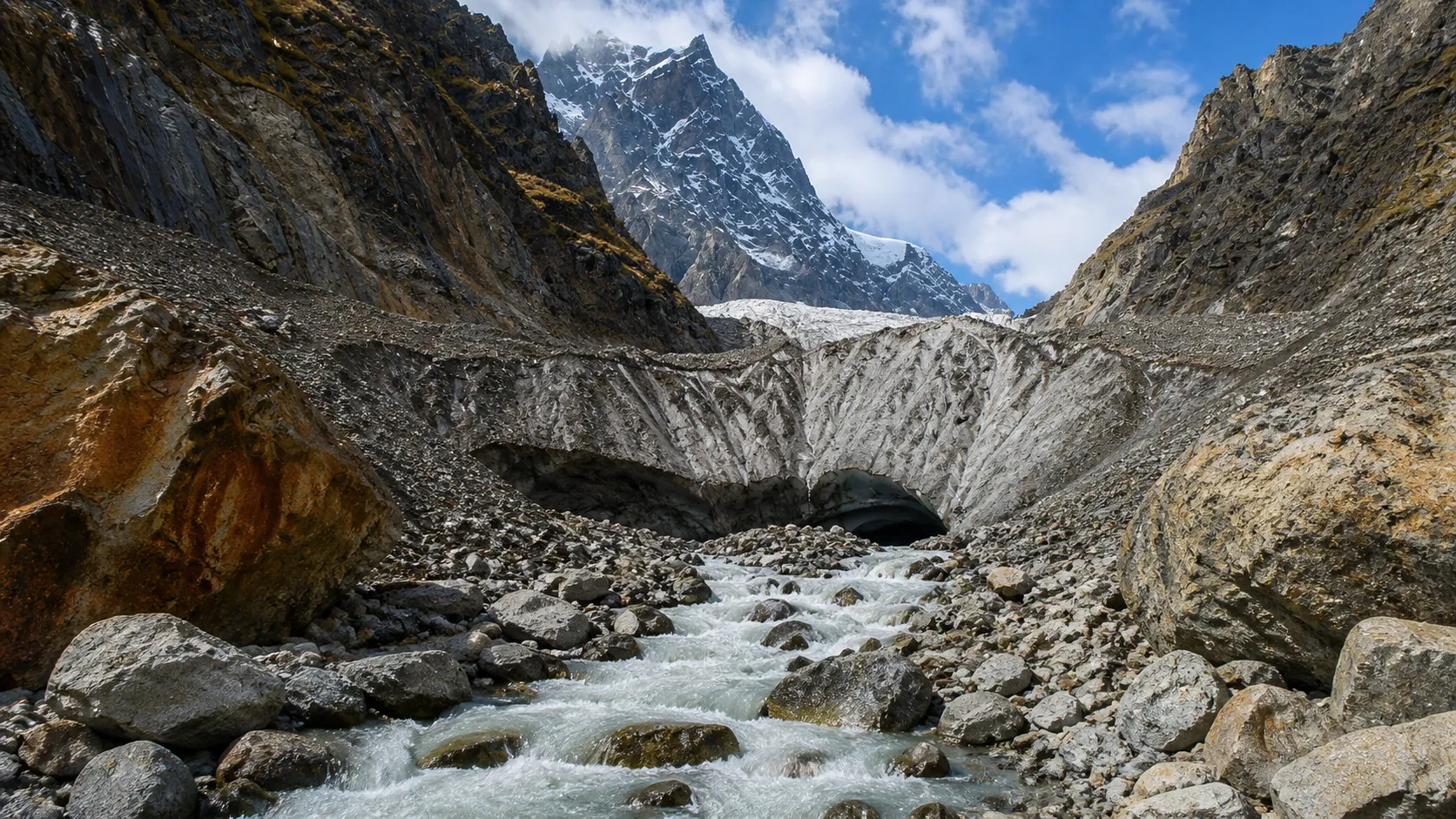
Svaneti has some of the largest glaciers in the Caucasus. Chalaadi hangs above Mestia in a valley you can walk to in under two hours. The Adishi Glacier dominates the mid-section of the Mestia–Ushguli trek, a wall of blue-white ice that creaks and groans audibly on warm afternoons. The Shkhara Glacier feeds the headwaters of the Inguri River — Georgia’s longest — at the foot of the country’s highest peak. These are not relics. They are alive, massive, and — yes — retreating, which makes seeing them now feel both urgent and privileged.
Wildlife is harder to spot than scenery, but it’s here: Caucasian tur (a mountain goat with impressively curved horns) on the high ridges, golden eagles overhead, bearded vultures if you’re lucky, wolves in the deeper valleys. Brown bears inhabit the forests, though encounters with hikers are rare. What you will see without fail: cows on the trail, horses grazing on passes, and shepherd dogs that take their territorial responsibilities very seriously. They’re guarding livestock, not attacking you — but give them space, make noise, and don’t run.
Best Time to Visit
The trekking season runs from mid-June through late September, with July and August offering the warmest weather and longest days. June brings wildflowers but also snowmelt-swollen rivers. September has fewer crowds and golden light but shorter days and colder nights. Ski season at Hatsvali and Tetnuldi resorts runs December to mid-April. Winter visitors can experience Lamproba and a Svaneti buried in snow — dramatic and authentic, if you don’t mind challenging road conditions.
When to Come to Svaneti
| Season | Months | What to Expect | Best For |
|---|---|---|---|
| Early Summer | June | Wildflowers, snowmelt rivers, some passes still snowy. Fewer hikers. | Photography, day hikes, wildflower enthusiasts |
| Peak Summer | July – August | Warmest weather, all passes open, longest days. Most trekkers on the trail. | Multi-day treks, Mestia–Ushguli, Transcaucasian Trail |
| Early Autumn | September | Golden light, cooler nights, thinner crowds. Some guesthouses close late month. | Experienced trekkers, culture, photography |
| Winter | December – March | Snow-covered towers, ski resorts open, roads challenging. Lamproba in February. | Skiing (Hatsvali & Tetnuldi), Lamproba, ski touring |
| Spring | April – May | Quiet, muddy trails, warming valleys. High passes still closed. | Sightseeing, cultural tours, avoiding crowds entirely |
Things to Know Before Visiting Svaneti
Getting There
Mestia is reachable by road from Tbilisi (8–9 hours via Zugdidi), Kutaisi (5–6 hours), or Batumi (6–7 hours). There are also 30-minute flights from Natakhtari airfield near Tbilisi to Queen Tamar Airport in Mestia (~90 GEL) — weather-dependent and worth booking early. The Ushguli road from Mestia was fully paved in 2024, cutting what was once a brutal jeep track to a 60–90 minute drive.
Cash Is King
Mestia has ATMs and basic shops. Ushguli has neither. Guesthouses on the trekking routes accept cash only, and mobile coverage disappears between villages. Bring enough lari in cash to cover your entire trek, plus a buffer. Budget roughly 200–300 GEL per day for guesthouse accommodation with meals.
Guesthouses, Not Hotels
Outside Mestia, accommodation means family-run guesthouses — simple rooms, shared bathrooms, and home-cooked meals served family-style. Heating is rare. Hot water is unreliable. WiFi is a suggestion, not a promise. What you get instead: genuine hospitality, enormous portions, and chacha with your host. Pack warm sleeping clothes and manage expectations — or better yet, abandon them.
Hire a Local Guide
The main trails are marked, but conditions change with weather, river crossings can be tricky after rain, and a local guide transforms a hike into a cultural education. Our Svaneti-born guides know which pass is snowed in, which guesthouse serves the best kubdari, and which tower has the story worth hearing. On remote routes, a guide is not optional — it’s essential.
Respect the Dogs
Shepherd dogs protect livestock on mountain trails. They look intimidating because that is their job. Don’t run, don’t wave sticks, don’t make direct eye contact. Walk slowly, give them distance, and make calm noise so they know you’re human. A trekking pole held vertically (not wielded) helps. If a dog approaches, stop moving and let it investigate. Bites are rare — but startled encounters are not.
Medical Insurance Required
As of January 2026, all foreign visitors to Georgia must carry medical insurance. The nearest hospital to Svaneti is in Zugdidi — several hours away. Carry a basic first-aid kit, know your limits, and trek with someone who knows the terrain.
Tours in Svaneti
All our guides are born and raised in Svaneti. They know which river crossings are safe after rain, which guesthouse grandmother makes the best kubdari, and which tower in Adishi has the story that makes the whole trek click. Trekking, ski touring, horse riding, cultural tours — they’ve spent their lives in these mountains so you can spend a week in them.
